
5 Types of Experiential Marketing to Try
It’s one thing to hear about a brand. It’s entirely different to experience one. Experiential marketing — experiences for customers to truly immerse themselves in your brand — is one of the most creative tools to include in your marketing strategy, but it’s also tricky to get right. Thankfully, the difficulty makes planning experiential marketing tactics so much fun for ambitious marketers. It’s also what makes excellent examples so memorable.
Interested? An experiential marketing strategy might be exactly what you’re looking for, and we can help you get started.
Why experiential marketing?
First off, let’s be honest. Without careful planning, it’s easier to get cheesy results than show-stoppers. These techniques also often require a heavy investment of time, resources and budget. So, why bother? Well, because it works. Creating branded experiences shows your customers what you’re really about and what you value. And if that’s not enough, 91% of consumers are more likely to purchase the product or service after participating in a brand experience or interaction.
Translation: personally experiencing a brand often leads to buying its products or services.
That’s only the first step, though. There are several types of experiential marketing that could have a massive impact on your bottom line. Which is right for your brand?
Guerrilla Marketing
Experiential marketing may seem like a spin-off of another advertising classic: guerrilla marketing. While modern experiential marketing can be extremely expensive and is often entirely in line with existing brand guidelines, guerrilla marketing is 1) unexpected, 2) usually low-budget and 3) something that leaves an impression.
Memorable, impactful guerrilla marketing is often the type that gets people talking. Whether it’s SUBliminal messaging projected on buildings by Subway, Samsung’s Galaxy giveaway for the 312 residents of the Dutch village of “Appel,” or Domino’s paving roads across the country to reduce potholes for delivery drivers, it needs to stand out.
An excellent example is the viral stunt for Paramount’s horror film Smile, where actors posed with the titular expression in the stands at several Major League Baseball games. Even people with no interest in scary movies (or sports) heard about the campaign — and therefore the movie. That’s great marketing.
Pop-Ups
People respond well to limited-time offers. That’s true for both sales and events!
Pop-up shops are an excellent way for retailers to flex their creative muscles and bring their products to a larger audience, especially when they don’t have many brick-and-mortar locations or are trying to expand brand awareness.
Fendi collaborated on a pop-up with a floral artist to show off their collection’s botanical theme. Harry Styles’s brand Pleasing unveiled the “Pleasing Saloon,” a uniquely crafted pop-up for their fans in Austin, Texas.
But retail isn’t the only industry that can make a pop-up with impact.
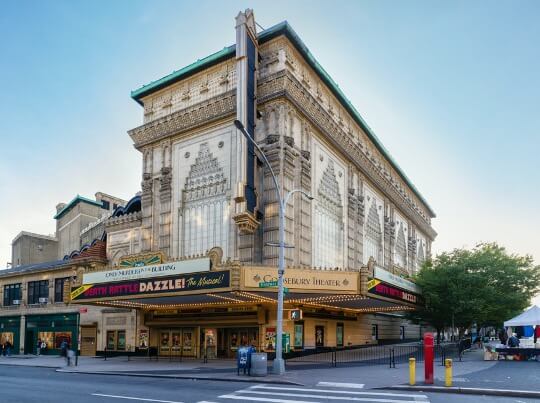
Before the finale of its third season, Hulu’s Only Murders in the Building invited viewers to stop by the United Palace Theater and take part in the investigation themselves. The entire building was decked out for the three-day event, immersed in the mystery behind who murdered Paul Rudd’s character, Ben Gilroy.
The marquee even showed an advertisement for the show’s fictional musical, Death Rattle Dazzle!
Over 4,000 guests attended, boosting the ratings for the final episode being promoted and delivering a memorable, immersive experience.
Event Marketing
Some experiential marketing efforts are event-based, although that doesn’t make them “event marketing.” It’s like how all rectangles are squares, but not all squares are rectangles.
SXSW and Comic-Con are huge events that can propel brands to new heights. The events themselves, however, are not inherently experiential marketing.
Adding an experiential marketing component to an event, though? That’s where things start to get good.
It doesn’t even need to be events that specifically revolve around entertainment.
INBOUND 2023, Hubspot’s annual conference, offered several different sections for attendees throughout the day. From brightly designed photo ops to soothing green spaces, Hubspot put together an event built for people to enjoy as an experience larger than just targeted education and excellent speakers.
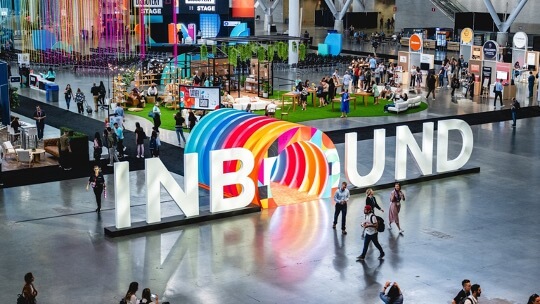
It would have been understandable for INBOUND to be a professional, vaguely boring conference. Instead, it garnered social media shares across the entirety of the event, drumming up interest for its next iteration.
Immersive Virtual Reality Marketing
You’re probably already familiar with virtual reality (VR), which allows a person to step into an immersive digital world. Augmented reality (AR) is the reverse, dropping digital effects into the real world. These twin technologies are a perfect way to give consumers targeted adventures that would be otherwise impossible, whether they bring existing items to the user’s location or they allow for fantastic occurrences.
This kind of experiential marketing has drastically improved since its beginnings. Tools that let you “try on” a pair of glasses or shade of lipstick from home are much more accurate now than when they first arrived on the scene — the same is true for VR that lets users step into fully-furnished living rooms or “go shopping” in virtual grocery stores.
These are helpful, but not necessarily memorable.
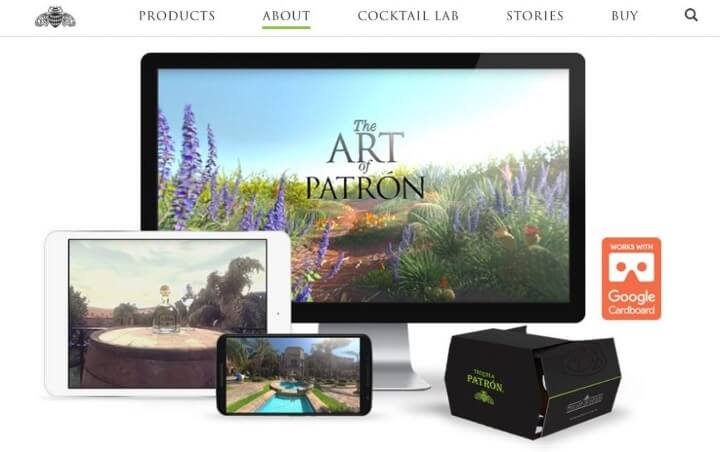
An early example of an immersive VR campaign came from the team at Patrón Tequila, which welcomed consumers behind-the-scenes to see how their products were made at Hacienda Patrón. A full tour of the distillery and sprawling agave fields made consumers feel more personally connected to the beverage, regardless of how close they’ve actually been to Jalisco, Mexico.
Brand Activations
Brand activations don’t necessarily have to be experiential marketing. Getting new information to your audience can come in all sorts of packages — but when it’s done well, experiential marketing tactics are a surefire way to help them remember what you’re selling.
This is even the case for brands that people already know.
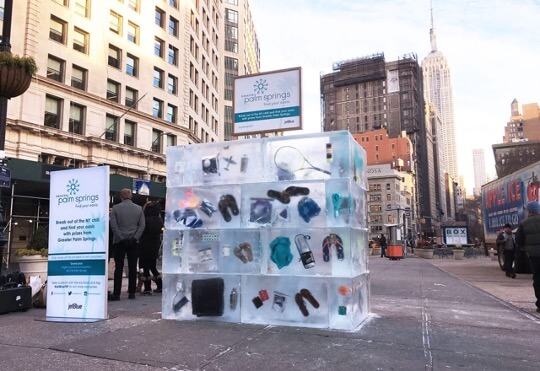
Most consumers in New York City were aware of JetBlue. But they weren’t aware that a direct flight from NYC to Palm Springs had just dropped. The airline wanted a way to specifically show off that flight — what better way than some experiential marketing for publicity?
In the deep cold of NYC winter, they rolled out a ton of high-quality sports and beach gear, perfect for a trip to California — encased in several solid blocks of ice.
Any passers-by were welcome to take whatever they could get their hands on, leading to people chipping away at the ice with any implements available — keys, quarters, cards.
And once they had their prizes? Well, what a perfect time to book a vacation!
How to Make Experiential Marketing Work for Your Brand
Seeing a few of the best examples of experiential marketing should inspire you to strive for experiential excellence for your own brand. To make any of these types of experiential marketing work for you, keep these principles in mind:
- Be memorable
- Stay on message (or make sure there’s a point to going off-course)
- Try something new or remarkable
- Have fun
- Create immersive ways for people to experience your brand
Keep these big picture ideas in mind to make your next experiential marketing effort a success.
Unsure of how to move forward? Give OBI a call. We’d love to ideate and execute an experiential marketing strategy that puts your brand in the spotlight — online and off.