

What Is a Digital Marketing Agency?
(And What Do Marketing Agencies Even Do?)
The simple answer is that a digital marketing agency is a strategic partner that helps businesses plan, execute and measure marketing across digital channels. Depending on the agency, that might include everything from business and marketing strategy to branding, creative, paid media, SEO and GEO, content, email, social media, customer experience and analytics.
But a list of services only explains part of what a marketing agency does — and only if you’re familiar with what those services do.
At the risk of patting ourselves on the back, we’ve learned that the best marketing agency does more than produce gorgeous campaigns or efficiently manage channels. It helps organizations understand their customers, figure out where they want to go and chart the path to get there.
Because nobody wants “marketing” — they want growth! Leads! Awareness! A stronger brand! Better customer experiences! More bang for their buck!
A great marketing agency is one that connects the work to the outcome.
Jump to:
- Business and Marketing Strategy + Research
- Brand Strategy and Creative
- Integrated Digital Marketing and Media
- Measurement, Attribution, Optimization
What Does a Digital Marketing Agency Do?
Digital marketing agencies help businesses develop and execute strategies for reaching, engaging and converting their audiences through primarily digital channels.
Exactly what that looks like depends on the agency. Some specialize in a single discipline, such as SEO, social media or paid advertising. Others operate as full-service marketing agencies, bringing strategy, creative, media, technology and measurement all under one roof.
At their best, marketing agencies work across four interconnected areas: strategy, brand and creative, marketing execution and measurement.
Business and Marketing Strategy + Research
An awful lot of work happens before the first ad goes live.
Marketing agencies help organizations understand where they are today, where they want to go and what’s standing in their way. It’s like making a map and building a custom compass, all while functioning as a personal navigator and guide.
That can include:
- Business and marketing consulting
- Fractional CMO leadership
- Differentiation and growth strategy
- Marketing organization design
- Customer experience strategy
- Customer journey mapping
- Our trademarked O’Brien Voice of Customer (O.VOC™) research
- Brand architecture
- Marketing technology consultation
This work creates the foundation for everything that follows — the stuff we classically think of as advertising. Instead of jumping immediately into tactics, a strategic agency helps determine which problems to be prioritized and where marketing can have the greatest business impact.
Half the battle is often challenging existing perceptions and building a foundation to do something groundbreaking.
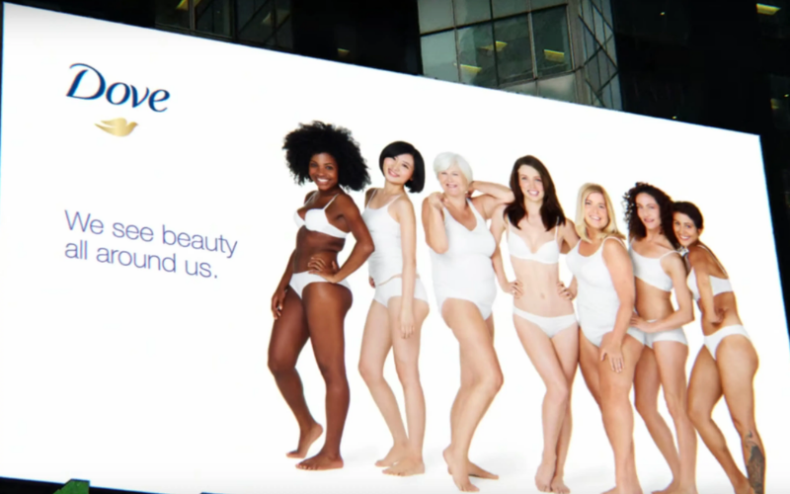
Real World Example: Dove Beauty
Today, many of us think of Dove, a company that was founded in 1957, differently than they marketed themselves for the first 47 years of their existence. Instead of immediately thinking of them as soap that also includes moisturizing products — which was almost exclusively how they positioned themselves — it’s likely you think of Dove through the lens of their Campaign for Real Beauty.
This long-running shift in focus featured more relatable, everyday women instead of models. Dove was certainly not the first brand to pivot away from supermodels, but they are perhaps the most iconic. Why? Other than the budget to make this a global campaign, it was rooted in research.
Dove worked with an agency and seasoned researchers to conduct a study of 3,200 women, “The Real Truth About Beauty: A Global Report.” This study was the foundation of their iconic campaign, especially the statistic that only 2% of women consider themselves beautiful. That fact was both a powerful number to serve as the base of their messaging, but also the beginnings of a completely different direction for the company. It’s considered one of the most successful and influential marketing campaigns in advertising history, generating media exposure at roughly 30x Dove’s initial advertising spend and upping global revenues by 10% in the first year alone, almost doubling sales within a decade.
You don’t get that kind of result without intense research and forward-thinking strategy.
Brand Strategy and Creative
Your brand is more than a logo, color palette or tagline. It’s the sum of what people understand, expect and experience when they interact with your organization. Of course, those things are also huge parts of how and why people are able to understand what it is you stand for.
From a marketing agency, services may include:
- Brand identity and positioning
- Messaging and content strategy
- Creative/campaign development
- Website strategy and design
- Thought leadership
- Public relations and earned media
- Reputation management
- Owned media and content
The goal is not simply to make a brand look better. We want to make it clearer, more distinctive and more meaningful to the people it needs to reach.
Real World Example: Apple
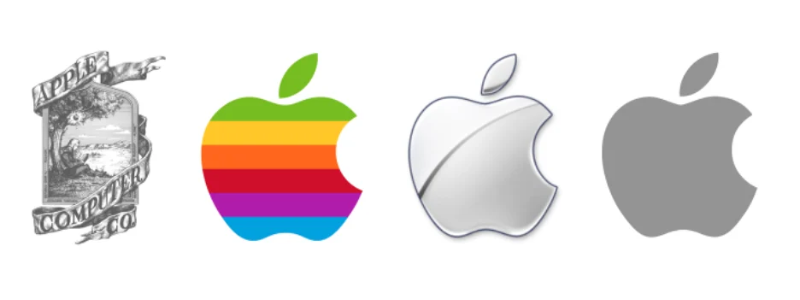
Think about Apple. They’re a company with a history of iconic brand strategy and creative, but they didn’t make these changes for no reason. Their little-known original logo featured Isaac Newton, a pioneer and inventor. They pivoted to the classic rainbow apple to reflect that they were the first computer with a color display. Then, when they introduced the classic iMac with colorful but translucent casing, their branding changed to reflect that, too.
Remember the “I’m a PC. And I’m a Mac” commercials? Or the iPod spots with dancing silhouettes? Or even Steve Jobs up on the stage in a black turtleneck and glasses, introducing a wild new piece of technology combined with thought leadership as an industry titan?
All these different facets worked together at different times to define Apple’s current brand philosophy and bring it to life consistently — but they only work when everything is aligned.
Integrated Digital Marketing and Media
Once the strategy is clear, a digital marketing agency helps turn it into action. Ideally, that’s across multiple channels and tactics, all under one larger strategy where each piece works together. (Full-service agencies may work beyond strictly digital channels, incorporating broadcast, out-of-home, print, direct mail, events and other experiences into a larger integrated strategy.)
A great integrated strategy understands your audience well enough to know where you should be, what to say and what their ideal next course of action is — not just blasting your brand everywhere.
Depending on the agency, that kind of strategy may include:
- Performance marketing and lead generation
- Paid search
- Paid social media
- Display and programmatic advertising
- Search engine optimization (SEO)
- Generative engine optimization (GEO)
- Answer engine optimization (AEO)
- Content marketing
- Email and SMS marketing
- Organic social media
- Connected TV and streaming
- Website and digital experiences
Real World Example: Barbie (2023)

Mike Marsland/WireImage/Getty Images, Stuart C. Wilson/Getty Images, Han Myung-Gu/WireImage/Getty Images
The integrated marketing campaign for the Barbie movie was far beyond a typical film campaign, even outside of the 100+ brand partnerships across clothing, jewelry, makeup, food and beverages, home décor, toys and tech.
Barbie leaned into every possible avenue for marketing. Most memorable is probably its social media marketing, taking advantage of both planned content and viral trends like “Barbenheimer.” There was also plenty of paid media across both digital and traditional advertising, curated owned media and a heavy emphasis on PR, with stories launching about the film that embraced the history of the brand and what the Barbie brand meant in 2023, often through a feminist lens.
The campaign even extended to the red carpet, where star Margot Robbie and her stylist showed off a full tour’s worth of fashion directly referencing iconic outfits from 60+ years of Barbie’s best looks.
It can be tough to drum up this kind of hype for a product that doesn’t have decades of nostalgia and star power behind it. But what made the Barbie campaign so successful was that it was extremely cohesive. Barbie understood its audience and was confident in its own voice, which made all those pieces come together to feel like one (iconic) entity.
Measurement, Attribution and Optimization
Executing the work is only the beginning. Modern digital marketing agencies also help businesses understand if their marketing strategy is working, patterns about what performs best and what could make everything work even better.
That can involve:
- Full-funnel reporting and analytics
- Marketing attribution
- Customer acquisition cost (CAC) analysis
- Conversion tracking
- Campaign optimization
- Audience and channel performance analysis
- Testing and experimentation
- Ongoing performance insights
Real World Example: Dollar Shave Club
Dollar Shave Club built its business around a simple subscription model: razors show up at your door before you have to think about buying them. But eventually, plenty of customers realized they didn’t actually need new razors as often as they were getting them and the company flagged that they were dealing with high amounts of churn.
That’s where measurement and analytics became more than numbers on a dashboard. By looking at retention and customer behavior over time, Dollar Shave Club could see where the subscription model was creating friction. If customers were accumulating non-perishable products faster than they could use them, their options shouldn’t be limited to continuing to pay or canceling altogether.
The company introduced more flexibility into the experience, including the ability to skip shipments and more easily manage subscriptions. Where some brands might have read the situation as a customer acquisition problem (find more subscribers!) Dollar Shave Club followed the data toward opportunities to improve the experience for the customers already there.
Reporting tells you what happened, but it’s good analytics that help you understand why.
When Does It Make Sense to Hire a Marketing Agency?
Most businesses don’t wake up one morning and casually decide they need an agency. Usually, something has changed.
Common reasons businesses hire marketing agencies include:
- Growth has stalled despite increased marketing investment
- Internal marketing teams are overwhelmed or understaffed
- Leadership needs greater visibility into marketing performance
- The brand feels outdated, inconsistent or undifferentiated
- A new product, service or market requires a new strategy or expertise
- Plenty of marketing is happening, but there’s no clear strategy connecting it
These are signs that marketing has become more than a collection of tasks to manage. It’s a business system that needs greater structure, expertise or alignment.
This is the place where the right agency partner can provide the most value!
What Kind of Marketing Agency Do You Need?
Not every firm does the same thing.
An ‘advertising agency’ traditionally focuses on campaigns, creative and paid media. A ‘PR agency’ specializes in reputation, earned media, thought leadership and public communications. And as you’ve learned, a ‘digital marketing agency’ focuses primarily on channels like search, social media, content, email, websites and digital advertising.
Then there’s ‘full-service’ or ‘integrated marketing agencies’ (like OBI Creative!) which bring multiple disciplines together under one strategy.
The right scope of services depends on what you and your existing team needs. Because choosing an agency doesn’t mean you have to replace your internal marketing team. You can have both!
An in-house marketing team offers deep organizational knowledge, day-to-day access, while an agency offers specialized expertise, additional capacity and experience across a wider range of marketing challenges. Agencies can fill specific gaps in your capabilities, support your team during periods of high demand and even provide executive-level guidance through services like fractional CMO leadership, without requiring an organization to immediately add a full-time leadership position.
You just have to know what you’re trying to accomplish and identify the resources you already have.
How to Choose a Digital Marketing Agency
Start with the way the agency thinks, not just the list of services on its website.
Before choosing a digital marketing agency, consider questions like:
- Does the agency take time to understand your business before recommending tactics?
- Can they connect marketing activity to measurable business outcomes?
- Do they have the capabilities you need now and as your needs change?
- How do they use customer research and data to inform decisions?
- How will they collaborate with your internal team?
A long capabilities list can be valuable, particularly when you want an integrated partner. But capabilities alone do not make an agency the right fit.
Easily forgotten but monumentally important: when you choose an agency to be your partner, you’re also choosing the people who will be sitting at the table when difficult questions need answers.
Just remember, a successful agency relationship is not one-sided — we do call it a partnership, after all. Even the strongest and shiniest agency needs access, collaboration and context from its client. That means establishing clear goals, providing access to relevant data and internal expertise, creating efficient decision-making processes and being willing to test, learn and adapt.
In our experience, agencies work best when they are treated as an extension of the team instead of an external order-taking service.
What Does a Great Marketing Agency Really Do?
Marketing agencies are sometimes reduced to the things we make: websites, campaigns, media buys, social media posts, beautiful new branding. And of course, those deliverables matter! But our real job is bigger than that.
A great marketing agency helps you see what you can’t from inside your own organization. We bring fresh eyes, customer insight and decades of experience to the table to help you make smarter business decisions.
At OBI Creative, we stay with the work from the first question to the final results and beyond. With strategy, research, creative, media, technology and measurement capabilities under one roof, we can follow the problem wherever it leads rather than handing pieces of it off along the way.
When businesses come to us, it’s because they have somewhere they want to go, and they know we’ll get them there.
Ready to figure out how to launch a marketing partnership? Talk to OBI Creative.


